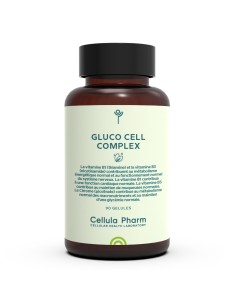
R alpha lipoic acid is of increasing interest in micronutrition for its central role in mitochondrial physiology and the regulation of oxidative stress. This molecule, studied for several decades, is considered a powerful antioxidant involved in cellular metabolism and energy production.

At the heart of current metabolic health concerns, insulin sensitivity and blood sugar control are the focus of research. R alpha lipoic acid is part of this dynamic due to its interactions with energy metabolism and intracellular redox mechanisms.

In this article, we analyze the biochemical foundations of r-alpha lipoic acid, its mechanisms of action, its place in mitochondrial health and the differences between the R form and racemic ALA classically used as a dietary supplement.

What is R alpha lipoic acid?

Thealpha lipoic acid is also referred to as alpha-lipoic acid or lipoic acid. Chemically, it corresponds to t'acid thioctic, sometimes referred to as thioctic compound in the scientific literature.

It exists in two enantiomeric forms: the form r-alpha and the form S. L’acid r corresponds to the natural configuration, sometimes referred to as r alpha in some works. The abbreviation aal is sometimes used to refer to alpha-lipoic acid, just like the term ala in English literature.

The natural form is the R configuration, considered as the natural and biologically activeform, i.e. the biologically active fraction of the acid. It is naturally present in theorganism, where it intervenes as a mitochondrial enzymatic cofactor.

R alpha lipoic acid is a molecule that is both water soluble and capable of acting in lipid compartments. It is often described as water-soluble and oil-soluble, which gives it a particular intracellular distribution.

In the mitochondria, it participates in the production of energyvia enzyme complexes involved in the metabolism of energy. It thus contributes to the maintenance of a normal mitochondrial function.

By its redox properties, it acts as a antioxidant naturallypresent in theorganism, and recognized as a powerfulantioxidantcapable of supporting cellular physiology.

Mechanisms of action: oxidative stress and cellular protection

One of the major areas of study for this acid is its ability to modulate oxidative stress. This one results from an excess of free radicals, including the particularly reactive hydroxyl radical.

R alpha lipoic acid neutralizes free radicals and participates in the protection against free radicals, thus limiting oxidative damageswithin theorganism. It helps to protect the cells against chronic oxidative aggressions.

It is also involved in the regulation of glutathione, a central molecule in the mechanisms of regeneration of antioxidant systems. Through this action, it indirectly supports other antioxidants such as coenzyme q10 in its reduced form, ubiquinol.

This interaction with redox systems influences the cellular metabolism and participates in the global metabolicequilibrium. Experimental data suggest that R alpha lipoic acid acts synergistically with certain micronutrients such as magnesium, involved in numerous enzymatic reactions.

All these mechanisms contribute to a better stability of the oxidative field, a determining factor in metabolic disorders.

Insulin sensitivity and blood sugar

Insulin sensitivity is a major issue in the regulation of circulating glycemiaand glucose. Alterations in mitochondrial energy metabolism are frequently observed in metabolic imbalances, particularly in diabetic individuals.

R-alpha lipoic acid is being investigated for its potential role in the modulation of insulin signaling. By supporting the production of mitochondrial energy, lipoic acid allowsto optimize certain metabolic fluxes related to glucose oxidation.

Experimental work indicates that R alpha lipoic acid may promote better glucose utilization at the cellular level, thereby contributing to metabolicequilibrium. This hypothesis is based on its role in energy metabolism and its action on oxidative stress, known to alter insulin sensitivity.

However, these observations remain cautious: R alpha lipoic acid is not a treatment, but a compound studied in an integrative approach to metabolic health.

ALA classic vs R-ALA: what differences?

L’alpha lipoic acid (racemic form) contains a 50/50 mixture of the R and S forms. The form r, on the other hand, corresponds to the natural form of acid, considered as the natural and biologically activeform.

<tdstyle="padding : 6px 12px; border : 1px solid #ccc;">Variante commerciale<tr</tr<trstyle=""padding : 6px 12px; border : 1px solid #ccc;">Absorption

CritèreRacemic ALAR-ALA
CompositionMix R + SR shape only
Biological activityFraction partially activeFraction biologically active of acid
StabilityRelatively stableSensitive to oxidation
Stabilized shapeR-alpha sodium lipoate
R-alpha-lipoate de sodium
Nature chimiqueAcide alpha lipoïqueLipoate de sodium (un sel de sodium)
VariablePotentiellement meilleure biodisponibilité

The lipoate corresponds to the ionized form of acid. The sodium is used to stabilize the molecule in the form of r-alpha-lipoate sodium, improving its conservation and its bioavailability. This association with sodium does not have a significant nutritional impact at the doses used.

The potential clinical interest of R-ALA lies in its proximity to the natural formfound in theorganism.

Supplementation and precautions

R alpha lipoic acid is offered as a food supplement. Its presence in food remains modest, although it is found in certain plant and animal matrices.

Any varied and balanced diet remains a priority before any supplementation. As with any dietary supplement, it is advisable not to exceed the recommended daily intake.

A medical advice is recommended in case of pathology or ongoing treatment. The organism’s response may vary depending on metabolic status and overall nutritional environment.

R alpha lipoic acid and overall mitochondrial health

Maintenance of efficient energy-yielding metabolism is central to normal mitochondrial function. By supporting energy production, R alpha lipoic acid contributes to the redox balance of theorganism.

Its role as anantioxidantparticipates in limiting the damages related to cellular aging and chronic oxidative imbalances. R alpha lipoic acid is thus part of a comprehensive approach to mitochondrial and metabolic health.

FAQ – Acide R Alpha Lipoïque

What is the difference between ALA and R alpha lipoic acid?

Data from studies suggest that berberine contributes to stabilizing blood glucose, particularly in subjects with carbohydrate imbalance.

Does R alpha lipoic acid help blood sugar?

It is studied for its role in energy metabolism and insulin sensitivity, with a potential impact on blood sugar levels.

What is the best form: sodium r-alpha lipoate or ALA?

Sodium r-alpha-lipoate corresponds to a stabilized form of the R configuration.

Is it a good antioxidant dietary supplement?

It is recognized for its antioxidant properties, particularly at the mitochondrial level.

Are there any precautions to take?

Yes, medical advice is advised in case of treatment or pathology.

Sources

Clinical and mechanistic studies on α-lipoic/ R-ALA

Improvement of insulin sensitivity in type 2 diabetes

L’administration orale d’acide alpha-lipoïque RAC module la sensibilité à l’insuline chez les patients atteints de diabète sucré de type 2 — Randomized clinical trial showing that oral administration of alpha-lipoic acid improves insulin sensitivity in patients with type 2 diabetes.

PubMed – RAC-alpha-lipoic acid and insulin sensitivity (1999)

Review: α-lipoic and modulation of insulin sensitivity

Alpha-lipoic acid: a multifunctional antioxidant that improves insulin sensitivity in patients with type 2 diabetes—A review analyzing the effects of LA on insulin sensitivity in diabetes. PubMed – Review of alpha-lipoic acid on insulin sensitivity (2000)

R-ALA in an animal model of metabolic syndrome / T2D

(R)-α-lipoic acid reduces blood glucose and lipid abnormalities in metabolic syndrome and T2D (rat model) — Étude préclinique montrant des effets du R-ALA sur la régulation du glucose et des lipides.

PMC – R‑α‑lipoic acid in metabolic syndrome (2017)

Pharmacocinétique du R-enantiomère vs racémique

The Plasma Pharmacokinetics of R-(+)-lipoic Acid — Étude des différences pharmacocinétiques entre le R-enantiomère et le mélange racémique.

 PubMed – R‑(+)-lipoic acid pharmacokinetics (2007)

Complementary sources (context on ALA and insulin sensitivity)

Alpha-Lipoic Acid and Glucose Metabolism — Recent review on the functions of ALA in glucose metabolism and insulin resistance (includes data on R and S isomers).

Alpha-lipoic acid and glucose metabolism review (2022)

Vous aimerez lire aussi :

Insulin resistance: when the cell becomes less receptive to the insulin signal

Insulin resistance corresponds to a decrease in the ability of cells to respond effectively to the insulin signal.

Read more
Énergie Cellulaire
Cellula Team

Low-grade inflammation and insulin resistance: a disrupted cellular dialogue

Low-grade inflammation corresponds to a chronic and discreet activation of inflammatory pathways, likely to interfere with insulin signaling at the cellular level.

Read more
Énergie Cellulaire
Cellula Team

Metabolic syndrome: integrated reading through the prism of the cell

The metabolic syndrome The metabolic syndrome can be understood as the expression of a global imbalance of the field, readable at the cellular level.can be understood as the expression of a global imbalance of the field, readable at the cellular level.

Read more


Énergie Cellulaire
Cellula Team

Why some metabolic terrains respond slowly to classical approaches

The slow response of certain metabolic fields is often explained by deep cellular adaptations, installed over time.

Read more
Énergie Cellulaire
Cellula Team

Article rédigé par l’équipe scientifique Cellula Pharm. Laboratoire expert en santé cellulaire et micronutrition.