Sea buckthorn oil: a plant source naturally rich in omega-7

Small berries, remarkable lipid profile.

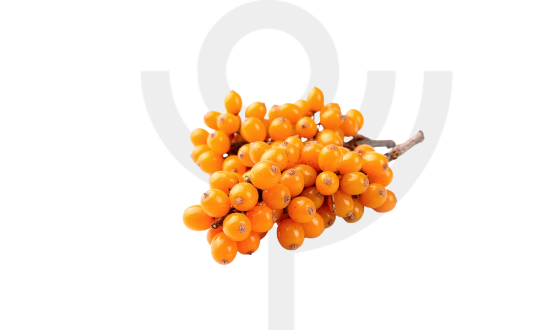
The sea buckthorn (Hippophae rhamnoides) is a shrub recognized by its small bright orange berries. The oil extracted from its berries has a particularly interesting lipid profile, notably with a naturally high content of palmitoleic acid, a fatty acid from the omega-3 family.7.

It also contains various fatty acids, tocopherols, carotenoids and phytosterols.

But not all sea buckthorn oils are the same: part of the berry used, omega-7 concentration, origin, and extraction process.

Magnésium - Sommaire

Content

  1. What is sea buckthorn oil?
  2. Why do people talk about omega-7 so much?
  3. How is sea buckthorn oil extracted?
  4. What are the differences between pulp and seed?
  5. What is in sea buckthorn oil?
  6. Why is sea buckthorn oil being studied?
  7. In what forms can you find sea buckthorn?
  8. How to choose a quality sea buckthorn oil?
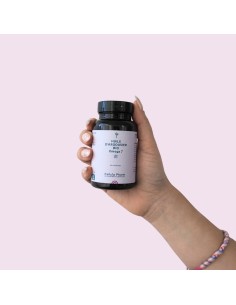
  9. And the Phra Pharm Sea Buckthorn Oil
  10. Things to remember

1. What is sea buckthorn oil?

Sea buckthorn oil is obtained from the berries of Hippophae rhamnoides. Depending on the part of the fruit used, its fatty acid profile can vary significantly.

The pulp oil is particularly distinguished by its natural richness in palmitoleic acid (omega-7).

Its characteristic orange color is related to the natural presence of pigments, particularly carotenoids.

Where does sea buckthorn oil come from?

The sea buckthorn grows naturally in different parts of Europe and Asia and adapts particularly well to harsh environments.

It is now grown in various countries, including Europe, where organic farming practices are also used.

Tru-mouth Pharm chose an oil from organic sea buckthorn grown in Europe.</strong

D'ou vient l'huile d'argousier

2. Why do we talk so much about omega -7?

Omega-7s are a family of monounsaturated fatty acids. Among them is palmitoleic acid, naturally present in some food sources but much less known than omega-3, 6, and 9.

Oil from the pulp of sea buckthorn berries is a plant source naturally rich in palmitoleic acid.

Is omega-7 an essential fatty acid?

No. Unlike linoleic acid (omega-6) and alpha-linolenic acid (omega-3), palmitoleic acid is not considered an essential fatty acid because the body can synthesize it.

This does not prevent seabuckthorn oil from distinguishing itself by its particular lipid profile.

3. How is sea buckthorn oil extracted?

Extraction at supercritical CO2 uses carbon dioxide under precise temperature and pressure conditions.

In this so-called supercritical state, CO2 has properties intermediate between those of a gas and a liquid and can be used as an extraction fluid.

Once extraction is complete, the pressure is lowered: the CO2 becomes gaseous again and naturally separates from the oil.

Why choose this method?

  • No organic solvent used for extraction
  • Controlled temperatures
  • Particularly suitable for lipid materials

4. Pulp or seeds: what are the differences?

PULP OIL

Particularly rich in omega-7

It naturally has a significant proportion of palmitoleic acid.

SEED OIL

A different profile

It has more polyunsaturated fatty acids, including omega-3 and omega-6.

Why is this difference important?

Because the simple mention 'seabuckthorn oil' is not enough to know one’s lipid profile'.

To choose an oil for its rich omega-7 content, it is worth looking at the part of the berry used and the actual omega-7 content indicated by the manufacturer.

D'ou vient l'huile d'argousier

5. What does sea buckthorn oil contain?

Sea buckthorn oil has a diverse lipid profile, the proportions of which vary depending on the variety, origin, the part of the berry used, and the extraction process.

You can find :

  • OMEGA-7: Palmitoleic acid
  • OMEGA-9: Oleic acid
  • OMEGA-6: Linoleic acid
  • OMEGA-3: Alpha-linolenic acid

as well as various tocopherols, carotenoids, and phytosterols.

And in our oil?

37 % d’oméga-7
360 mg d’oméga-7 par dose journalière

6. Why is sea buckthorn oil being studied?

Sea buckthorn oil is the subject of scientific research due to its diverse lipid profile and naturally occurring compounds.

Research has focused in particular on sea buckthorn oil consumed orally and at various parameters related to the skin and mucous membranes.

what the research says

Sea buckthorn oil is the subject of scientific research due to its specific lipid profile, its richness in different fatty acids and the natural presence of compounds such as tocopherols and carotenoids.

Several clinical studies have focused in particular on its oral consumption and on various parameters related to mucous membranes, eye comfort, and skin.

Sea buckthorn oil and vaginal mucosa

A randomized, double-blind, placebo-controlled study was conducted with 116 postmenopausal women presenting symptoms of dryness, vaginal itching or burning sensation.

During 3 months, participants were given 3g of sea buckthorn oil per day or a placebo.

In particular, researchers observed a significantly higher improvement than The integrity of the vaginal epithelium in the sea buckthorn oil group in the analysis including all randomized participants. A favorable trend was also observed regarding the overall vaginal health index.

Larmo P.S. et al., 2014—Maturitas, 79(3), 316–321.
DOI: 10.1016/j.maturitas.2014.07.010

Sea buckthorn oil and vaginal mucosa

A randomized, double-blind, placebo-controlled study was conducted with 116 postmenopausal women presenting symptoms of dryness, vaginal itching or burning sensation.

During 3 months, participants were given 3g of sea buckthorn oil per day or a placebo.

In particular, researchers observed a significantly higher improvement than The integrity of the vaginal epithelium in the sea buckthorn oil group in the analysis including all randomized participants. A favorable trend was also observed regarding the overall vaginal health index.

Larmo P.S. et al., 2014—Maturitas, 79(3), 316–321.
DOI: 10.1016/j.maturitas.2014.07.010

Sea buckthorn oil and vaginal mucosa

A randomized, double-blind, placebo-controlled study was conducted with 116 postmenopausal women presenting symptoms of dryness, vaginal itching or burning sensation.

During 3 months, participants were given 3g of sea buckthorn oil per day or a placebo.

In particular, researchers observed a significantly higher improvement than The integrity of the vaginal epithelium in the sea buckthorn oil group in the analysis including all randomized participants. A favorable trend was also observed regarding the overall vaginal health index.

Larmo P.S. et al., 2014—Maturitas, 79(3), 316–321.
DOI: 10.1016/j.maturitas.2014.07.010

Sea buckthorn oil and dry eye

Another randomized, double-blind, placebo-controlled study involved 100 adults with dry eye symptoms ; 86 completed the study.

Participants consumed 2g of sea buckthorn oil daily for 3 months, from autumn to winter.

The osmolarity of the tear film increased during the winter period in both groups, but this increase was significantly less with sea buckthorn oil than with placebo. Some ocular symptoms have also improved.

Larmo P.S. et al., 2010—The Journal of Nutrition, 140(8), 1462–1468.
DOI: 10.3945/jn.109.118901

Sea buckthorn oil and skin

An older, randomized, double-blind, placebo-controlled clinical study examined the consumption of Seabuckthorn seed or pulp oil in people with atopic dermatitis.

It is particularly interesting to understand the difference in composition between the two oils: l’Pulp oil used in the study contained approximately 25% palmitoleic acid (omega-7), while seed oil had a much richer profile of linoleic and alpha-linolenic acids.

Yang B. et al., 1999—emJournal of Nutritional Biochemistry, 10(11), 622–630.
DOI: 10.1016/S0955-2863(99)00049-2

To remember

This work shows that sea buckthorn oil is being researched in humans, particularly around the mucous membranes, eye comfort, and skin.

However, the results of these studies concern oils, Specifically studied doses, populations and durations of use. They cannot be directly extrapolated to all sea buckthorn oil dietary supplements.

7. In what forms can you find sea buckthorn?

Oil 

Sea buckthorn oil can be used as is, including in certain food or cosmetic preparations depending on the product.

Capsules

They allow for a precise quantity of oil in a convenient format for daily use.

Berry juice

The juice has a different nutritional profile than oil since it contains much less fat.

Rack powder

It can be used in different food preparations or dietary supplements.

Can oil be used in the kitchen?

This depends on the oil being marketed and its intended use. Its profile rich in lipid compounds and its characteristic flavor generally make it more suitable for cold use than for cooking at high temperatures.

8. How to choose a quality sea buckthorn oil?

Look at the actual omega-7 content

"'Sea buckthorn oil' does not automatically mean 'high in omega-7'.

Look at the actual amount delivered per daily dose.

Identify the part of the rack used

Pulp oil and seed oil have different lipid profiles. To look for an oil that is particularly rich in omega-7, the oil derived from the pulp has a particularly interesting profile.

Look at the extraction process

Supercritical CO2 extraction yields without the use of organic extraction solvents.

Verify origin

A clearly identified origin provides more transparency about the raw material.

Compare doses, not just the number of capsules

Always watch:

mg of oil/ day → mg of omega-7/ day

9. And the sea buckthorn oil from Aker Pharm

  • 1000 mg d’huile d’argousier
  • 360 mg d’oméga-7
  • BIO issue de l’agriculture biologique
  • span style="background-color : #ffffff; color : #245865;">CO2 extraction au CO2 supercritique
  • Argousier cultivé en Europe
  • 30 jours, 2 capsules par jour

To remember

Sea buckthorn oil is distinguished above all by its particular lipid profile and natural omega-7 content.

However, not all sea buckthorn oils have the same composition. Part of the berry used, actual omega-7 content, origin, and extraction process are therefore important criteria when making your choice.

1000 mg of oil per daily dose, including 360 mg of omega-7, derived from organic sea buckthorn grown in Europe and obtained by supercritical CO2 extraction.